

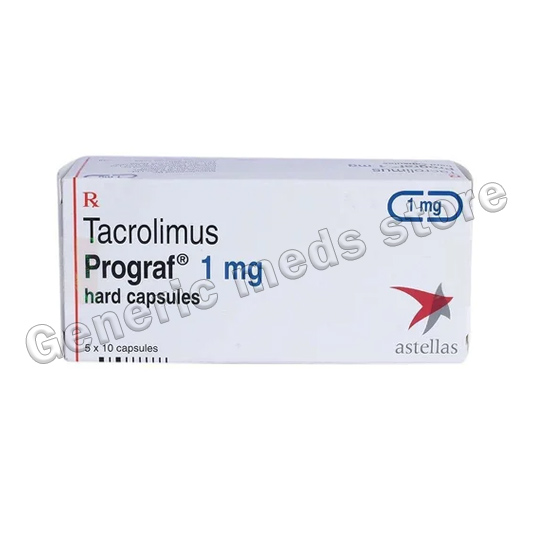
What is Tacrolimus 1 mg?
Tacrolimus 1 mg is an immunosuppressant medicine used mainly to prevent organ rejection in people who have undergone kidney, liver, or heart transplantation.
It helps your body accept the transplanted organ by lowering the activity of the immune system.
Some doctors also prescribe it (off-label) for certain autoimmune conditions when other treatments fail.
Manufacturer
Tacrolimus 1 mg is available under various brand names depending on the country. Common manufacturers include:
-
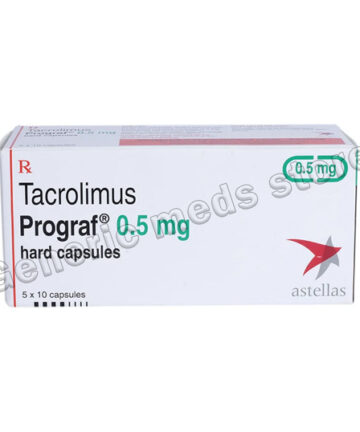
Astellas Pharma (Prograf)
-
Intas Pharmaceuticals
-
Panacea Biotec
-
Glenmark Pharmaceuticals
-
Zydus Cadila
-
Biocon
The exact manufacturer depends on the brand you have been prescribed.
Composition
Each capsule typically contains:
-
Tacrolimus 1 mg (active ingredient)
-
Inactive ingredients such as lactose, magnesium stearate, gelatin capsule shell, and coloring agents (vary by manufacturer).
Working (Mechanism of Action)
Tacrolimus works by:
-
Inhibiting calcineurin, an enzyme required for activating T-lymphocytes (immune cells).
-
Reducing interleukin-2 (IL-2) production.
-
Preventing the immune system from attacking the transplanted organ.
Result:
-
Reduced immune activity
-
Lower risk of organ rejection
How to Use Tacrolimus 1 mg
-
Take the capsule exactly as prescribed by your transplant specialist.
-
Usually taken once or twice daily.
-
Take it on an empty stomach (1 hour before or 2 hours after food) for best absorption.
-
Swallow whole with water—do not crush or chew.
-
Always take at the same time each day to maintain stable blood levels.
Your doctor will regularly check your Tacrolimus blood levels to adjust the dose.
Dosage
Dosage varies widely and is personalized.
Typical transplant doses (after initial high-dose phase):
-
0.1–0.3 mg per kg per day, divided into 1–2 doses
-
Later reduced to the lowest effective maintenance dose
Dosage depends on:
-
Type of transplant
-
Time since transplantation
-
Blood concentration of Tacrolimus
-
Liver/kidney function
-
Concomitant medications
Do not miss doses, as it can risk organ rejection.
Warnings and Precautions
Tell your doctor if you have:
Medical Conditions
-
Kidney problems
-
Diabetes or high blood sugar
-
Heart rhythm disorders
-
History of tumors or skin cancer
-
Electrolyte imbalance (low magnesium, high potassium)
Drug Interactions
Tacrolimus interacts with many medicines:
-
Antibiotics (erythromycin, azithromycin)
-
Antifungals (fluconazole, itraconazole)
-
Anti-seizure drugs
-
Blood pressure medicines
-
Other immunosuppressants
-
Herbal products (especially St. John’s Wort)
-
Grapefruit juice (increases Tacrolimus levels)
Monitoring Required
-
Tacrolimus trough levels
-
Kidney function
-
Blood glucose
-
Blood pressure
-
Electrolytes (Mg, K)
Pregnancy/Breastfeeding
-
Use only if necessary and under specialist supervision.
Benefits
-
Prevents rejection of transplanted kidney, liver, and heart.
-
More effective and better tolerated than many older immunosuppressants.
-
Helps maintain long-term organ survival.
-
May help treat autoimmune diseases where other medications fail (e.g., severe eczema, uveitis—off-label, based on doctor’s judgement).
Avoid taking Tacrolimus 1 mg
-
You are allergic to Tacrolimus or macrolide antibiotics.
-
You have uncontrolled infections.
-
You are taking St. John’s Wort.
-
You consume grapefruit or grapefruit juice regularly.
-
You are on medications that severely raise Tacrolimus levels (unless monitored).
Avoid live vaccines during treatment.
Side Effects
Common
-
Tremors
-
Headache
-
High blood pressure
-
High blood sugar/diabetes
-
Kidney function changes
-
Increased potassium
-
Sleep problems
-
Tingling or numbness
Serious (seek urgent care)
-
Severe kidney problems
-
Seizures
-
Irregular heartbeat
-
Signs of infection (fever, chills)
-
Severe hypertension
-
Confusion or visual changes
-
Severe allergic reaction
-
Skin lesions (risk of skin cancer increases)
Where to Store
-
Store in a cool, dry place below 25°C.
-
Keep capsules in their original blister pack until use.
-
Protect from light and moisture.
-
Keep out of reach of children.
Do not use expired medication.
Conclusion
Tacrolimus 1 mg is a potent immunosuppressant crucial for preventing organ rejection in transplant patients.
Because it affects the immune system strongly, it must be used exactly as prescribed, with regular blood-level monitoring to avoid toxicity or rejection.
It has powerful benefits but also significant risks if misused, so medical supervision is essential.