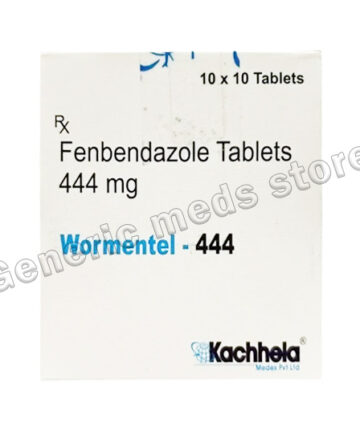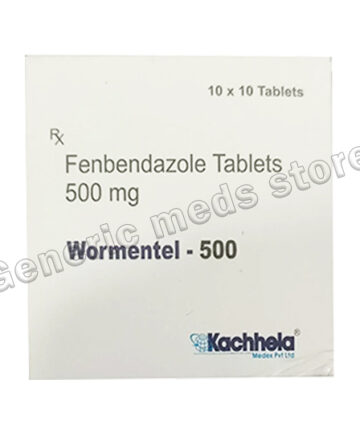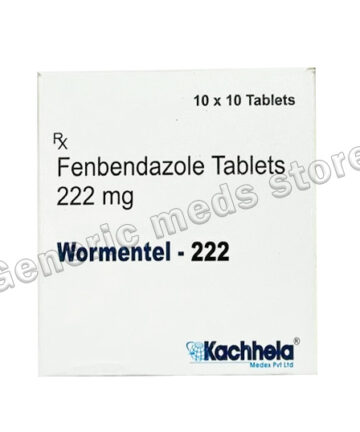


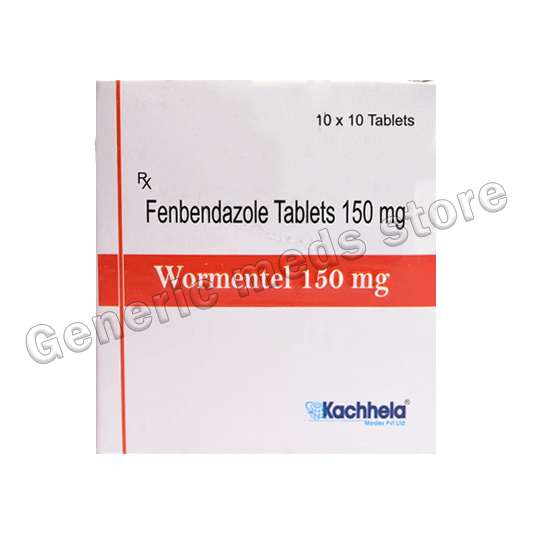
What Is Wormentel 150 Mg?
Wormentel 150 Mg is a pharmaceutical product primarily utilized for its anthelmintic (anti-worm) properties. The active ingredient is Levamisole Hydrochloride, dosed at 150 milligrams.
This strength often represents the standard adult dose for single-session deworming therapy.
Active Ingredient: Fenbendazole.
Strength: 150 mg per tablet.
Manufacturer: Kachhela Medex Pvt. Ltd.
Pharmacological Class: It’s a benzimidazole anthelmintic (i.e., a broad-spectrum dewormer).
Mechanism of Action
Fenbendazole works by binding to β-tubulin in parasite cells, which disrupts microtubule formation, messing up how parasites absorb nutrients. Levamisole works by acting as a neurotoxin to the susceptible worms.
It paralyzes the nervous system of the parasites, causing them to lose muscle control and detach from the intestinal wall. They are then expelled from the body via normal bowel movements.
What Is Wormentel 150 Used For?
Veterinary Use: Primarily used in animals (e.g., dogs, cats, livestock) to treat a variety of parasitic worm infections: roundworms, hookworms, whipworms, and some tapeworms.
Parasitic Control: Effective for internal parasites (nematodes) and often used in routine deworming protocols.
Off-Label / Experimental: Some sources mention fenbendazole being explored (or used off-label) in humans for cancer, but this is not a confirmed or approved standard treatment.
Dosage & Administration
- For animals, the dosage depends on species and weight.
- For example, in some veterinary references, 5 mg/kg is recommended for certain animals.
- Administration is oral, typically with food to reduce stomach upset.
- Duration may be 3–5 daysdependingg on the infection.
Side Effects
Most common adverse effects are mild and transient:
- Nausea
- Diarrhea
- Lethargy
- Headache
- Dizziness
- Fever
- Skin rash
In higher or prolonged doses (in animal studies), some toxic effects have been seen (e.g., lymphoid changes, some neurological effects in very high doses). According to toxicology data, the acute toxicity is low.
Safety Precautions / Warnings
- Patients with pre-existing liver or kidney disease may require dosage adjustment due to altered metabolism and excretion.
- Levamisole carries a risk of a serious, though rare, side effect called agranulocytosis.
- This condition involves a drastic reduction in white blood cells, severely compromising the immune system and increasing the risk of infection.
- Due to this potential risk, Levamisole’s use is often limited to specific indications, and blood monitoring may be required.
Regulatory / Toxicology Data
According to European regulatory assessment, fenbendazole has low acute toxicity in animal studies. In repeat-dose studies in animals, very high doses caused some adverse effects.
The liver and lymph nodes. Oral bioavailability is limited, and much of the drug is excreted via feces.
Bottom Line
Wormentel 150 mg is a veterinary dewormer, not primarily intended for humans. It’s effective against a broad spectrum of intestinal parasites in animals. While there is some interest in off-label human use, this is not clinically established or approved.
FAQs
How should I take Wormentel 150 mg?
It is usually taken as a single dose or as directed by the doctor. Tablets may be chewed or swallowed whole.
Can children take Wormentel 150 mg?
Yes, but only if prescribed by a doctor. Dosage may differ for children.
What conditions is this medicine used for?
It is commonly used to treat:
- Roundworm infections
- Hookworm infections
- Whipworm infections
- Pinworm infections
Can I take this medicine during pregnancy or breastfeeding?
The use of this product is not recommended during pregnancy or breastfeeding unless advised to do so by a healthcare professional.
Do I need a second dose?
Sometimes a repeat dose after 2 weeks is recommended, especially for pinworm infections. Follow your doctor’s instructions.