


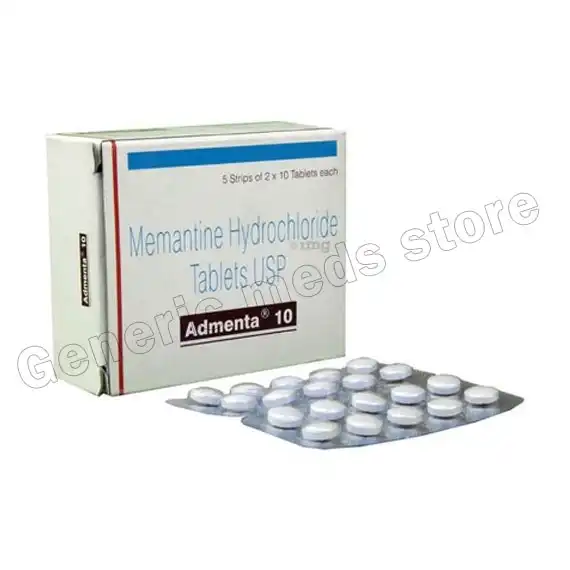
Admenta 10 (Memantine 10 mg)
Admenta 10 refers to memantine hydrochloride 10 mg tablets, a medication primarily used to treat moderate to severe Alzheimer’s disease (AD). It’s an NMDA receptor antagonist that helps manage symptoms by regulating glutamate activity in the brain.
Note: This is not medical advice—Alzheimer’s requires professional diagnosis and management. Memantine is prescription-only and should be used under medical supervision.
Key Facts and Mechanism
How It Works: Blocks excessive NMDA receptor stimulation by glutamate, which is implicated in AD-related neuronal damage.
Indications: Symptomatic treatment of moderate to severe AD; sometimes off-label for other dementias or Parkinson’s.
Dosage: Typically starts at 5 mg/day, titrated up to 10-20 mg/day (e.g., 10 mg twice daily). Taken orally, with or without food.
Efficacy and Benefits
Effectiveness: Clinical trials (e.g., MEM-MD-01 in Neurology) show memantine improves cognition (MMSE scores by 2-3 points), reduces caregiver burden, and delays nursing home admission by 6-12 months in moderate AD.
Duration and Onset: Benefits may take weeks to months; effects last as long as treatment continues.
Evidence: Meta-analyses in The Lancet Neurology confirm 20-30% symptom stabilization in 50-70% of patients.
Admenta 10 is often combined with acetylcholinesterase inhibitors (e.g., donepezil) for better outcomes.
Unique Aspects: Unlike cholinesterase inhibitors, memantine targets excitotoxicity, making it suitable for later-stage AD, where glutamate overactivity is prominent.
Safety and Side Effects
Common Side Effects: Dizziness, headache, constipation (affecting 5-15% of users, per FDA data).
Serious Risks: Rare seizures, hallucinations, or urinary retention; monitor for worsening confusion. Contraindicated in severe renal impairment or epilepsy.
Interactions: May interact with other NMDA modulators or drugs like amantadine. Avoid abrupt discontinuation to prevent withdrawal symptoms.
Precautions: Regular kidney function checks; not for mild AD or preventive use. Safe in pregnancy category B, but use cautiously in the elderly.
Availability and Purchasing
Where to Buy: Available at pharmacies with a prescription. Generic memantine is widely available and cost-effective.
Online Options: Sites like Genericmedsstore may offer it, with prices around $6-15 for 30 tablets. Shipping options vary, but verify site credibility to avoid counterfeits.
Legal Notes: Prescription required; international shipping may face customs issues. In the US, check FDA-approved generics from manufacturers like Teva.
Alternatives and Tips
Other Options: Donepezil or rivastigmine for milder AD; lifestyle interventions like cognitive training can complement treatment.
Resources: Refer to Alzheimer’s Association or NIH for guidelines; consult a neurologist for tailored care.

There are no reviews yet.